Meet WriteText 4.0: your brand voice, your rules, your content at scale. See what's new.
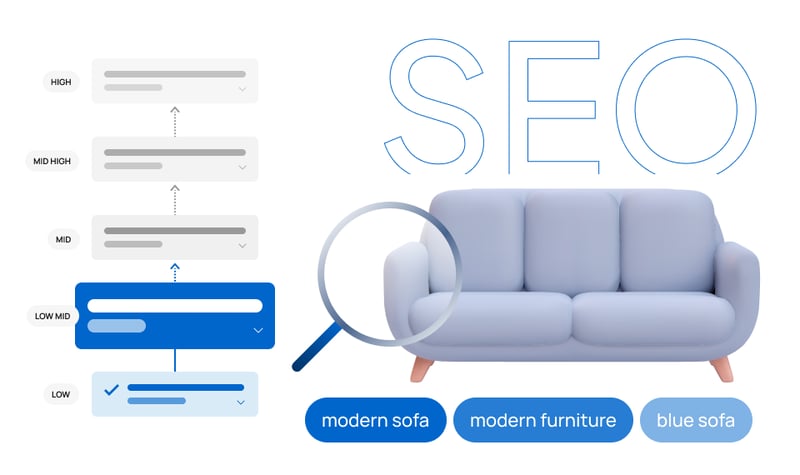
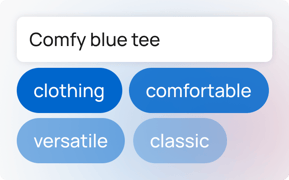
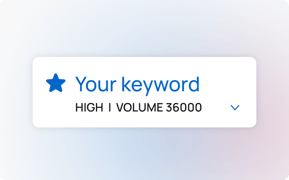
Discover high-impact keywords based on your product data, seed keywords, and product image. WriteText.ai evaluates search volume, contextual relevance, and competition through competitor keyword analysis to deliver smarter suggestions, eliminating the need for external SEO tools.

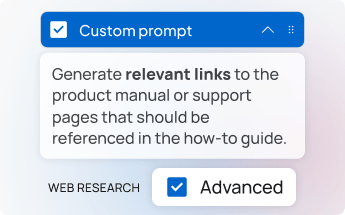
WriteText.ai can embed internal links to relevant pages on your store directly within generated content — automatically, as part of the writing process. Using a custom prompt section with Advanced research, the AI browses your live store, identifies relevant products, categories, guides, or resources, and links to them contextually in the content it produces. No manual link insertion required.
See which keywords your product pages already rank for. Use this insight to build on existing visibility, avoid cannibalization, and prioritize content updates based on real SEO performance with built-in SEO optimization tools that track and adapt to ranking changes. This ensures your product page SEO remains strong over time.
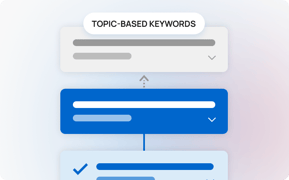
Organize keywords into topical clusters so your content ranks for multiple variations—boosting conversion-ready content creation and helping your overall ecommerce keyword strategy.
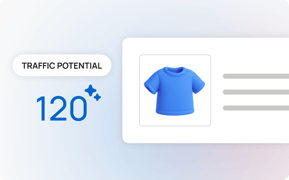
Get an overview of estimated traffic potential based on your target keywords for your product and category pages, powered by integrated SEO optimization tools that analyze keyword reach and click potential. Helping both product page SEO and category-level optimization.
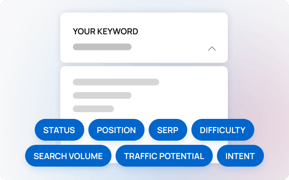
Get in-depth data, including Search Engine Results Page (SERP) info and ranking history. Understand keyword performance over time and identify opportunities for smarter targeting and optimization using WriteText.ai’s SEO optimization tool.
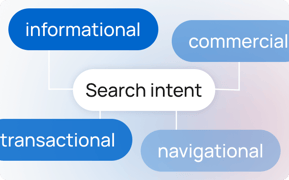
See intent (informational, navigational, transactional, commercial) behind your target and suggested keywords. Intent is used to filter and generate keyword suggestions that align with target search behavior, strengthening your ecommerce strategy through AI-driven SEO optimization tools focused on relevance and ranking potential.
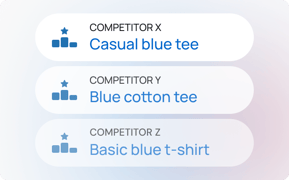
Find out what your competitors rank for. Use this data to guide dynamic keyword strategies and close content gaps, supporting multi-brand and multi-market capabilities, while enhancing your product page SEO. WriteText.ai’s SEO optimization tools make it easier to analyze and act on this data.
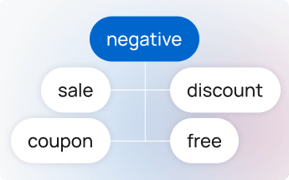
Exclude irrelevant or low-value terms—such as “free,” “cheap,” or unrelated brands—to keep your SEO and content focused on high-value searches. Managed in the backend with flexible matching options (contains or exact match), negative keywords prevent unwanted phrases from being included in your keyword analysis and optimization pipeline.
Quickly download keyword data in a structured CSV format for deeper insights and strategic planning, making it easier to refine your ecommerce keyword strategy. Together with other WriteText.ai features, this report completes your toolkit of powerful SEO optimization tools for managing search performance.
Identify when multiple pages compete for the same keyword. This report helps you find and fix SEO conflicts by showing overlapping keywords across product, category, and other pages—so you can keep your rankings focused and optimized. Ideal for maintaining healthy product page SEO.
View a complete log of all activities inside your ecommerce site or whole account.
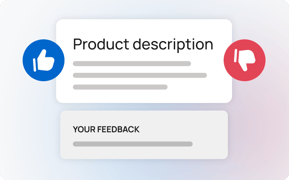
Share immediate feedback on generated content.
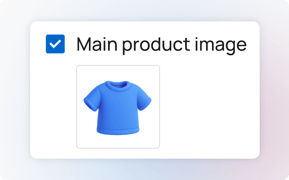
Our AI analyzes images to produce more context-relevant product descriptions.
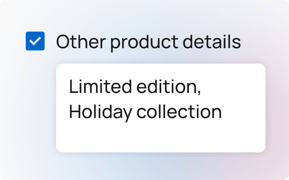
Include extra attributes or details to refine generated text. Boost accuracy and product appeal in descriptions.
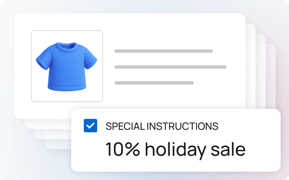
Insert specific guidelines for tone, disclaimers, or other requirements in bulk generation.
WriteText.ai's keyword analysis is built specifically for ecommerce content generation and covers the main data points needed to inform product and category page SEO: search volume, keyword difficulty, competitor rankings, search intent, traffic potential, and SERP history. For stores whose primary need is generating and optimizing product content, WriteText.ai provides the keyword data needed without requiring a separate subscription to a general-purpose SEO platform. Operators running broader SEO strategies that include technical audits, backlink analysis, or site-wide rank tracking may still want a dedicated SEO tool alongside it.
WriteText.ai's ranking visibility feature connects to search engine data to show which keywords your product pages currently rank for. This gives you a real-time view of existing organic positions, which you can use to decide whether to build on current rankings, avoid cannibalization, or prioritize content updates for underperforming pages. The data is displayed within the WriteText.ai interface alongside the keyword suggestions for each product.
Keyword cannibalization occurs when multiple pages on your store target the same keyword, causing them to compete against each other in search results. This can dilute rankings and make it harder for any single page to rank well for that term. WriteText.ai's keyword cannibalization report identifies which of your product, category, and other pages share overlapping keyword targets, so you can reassign or differentiate the keywords for competing pages and keep your SEO focused.
WriteText.ai categorizes keywords by their search intent — informational, navigational, transactional, or commercial — and displays this alongside each keyword suggestion. For ecommerce product pages, transactional and commercial intent keywords are typically the most valuable because they indicate a user who is ready to buy or actively comparing products. Intent filtering helps you select keywords that align with the buying stage of your target audience rather than attracting traffic that is unlikely to convert.
WriteText.ai uses its integrated keyword analysis system to scan top-ranking pages for your product's keywords and surface the terms those pages rank for. This gives you a view of keyword opportunities your competitors are capturing that you may not yet be targeting. The data is drawn from search engine index information rather than scraped directly from competitor pages, and it reflects search engine results at the time of analysis.
Negative keywords in WriteText.ai are terms you specify as excluded from your keyword analysis and optimization pipeline. Common uses include excluding words like "free," "cheap," or competitor brand names that attract the wrong audience or inflate keyword suggestion lists with irrelevant terms. Once set, negative keywords are filtered out of all analysis runs and will not be incorporated into generated content through keyword targeting.
Keyword clustering in WriteText.ai groups related keywords by topic and difficulty so that your content can target multiple semantically related terms together rather than a single keyword in isolation. This improves the breadth of search terms a product page can rank for. Clusters are organized as part of the keyword optimization pipeline, so you can see which group of terms a product is currently targeting and how those will evolve as rankings improve.
Yes. Using custom prompt sections with Advanced research enabled, WriteText.ai can include internal links in generated content where relevant. These links are based on the research performed during generation and should be reviewed before publishing.
The traffic potential feature in WriteText.ai shows an estimated organic traffic value for each keyword based on its search volume and the typical click-through rate for pages ranking at different positions. This gives you a forward-looking indicator of which keyword targets are likely to drive the most visits if the product page achieves a competitive ranking. It helps prioritize which products and keywords to focus on first within your optimization pipeline.
WriteText.ai's keyword analysis features are available across WooCommerce, Magento, and Shopify, with some specific capabilities available on particular platforms. The ranking visibility and traffic potential features, for example, are available on WooCommerce, Magento, and Shopify. Search intent filtering is currently available on WooCommerce and Shopify.